
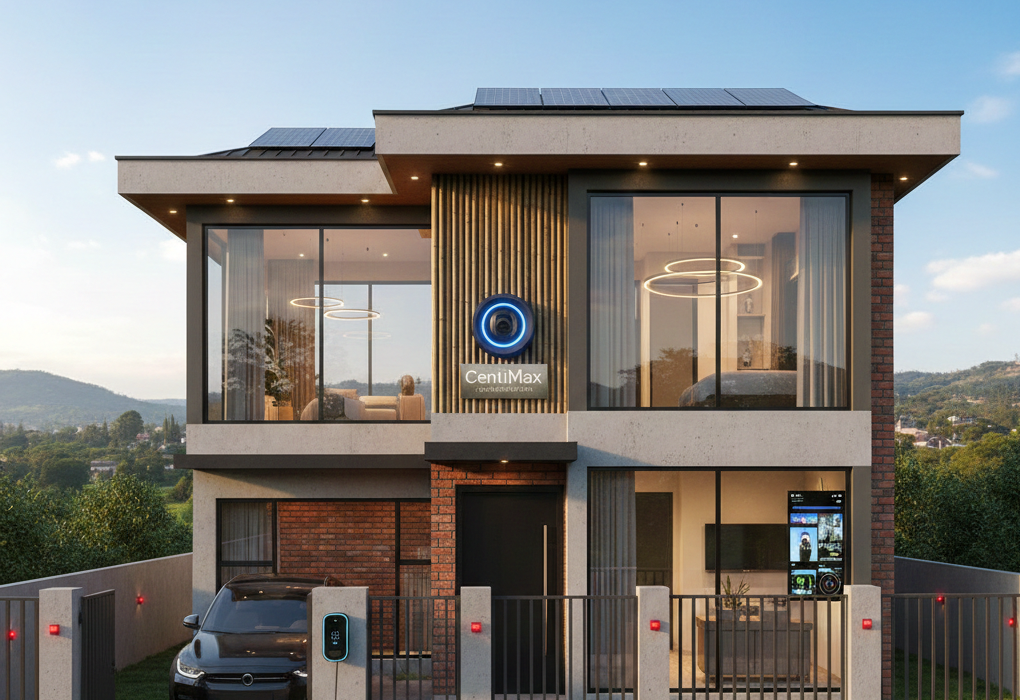
The image of a “smart home” in Kenya has long been associated with sci-fi movies or the ultra-luxury mansions of Muthaiga and Karen. However, as we move through 2026, a significant shift is happening. Driven by a tech-savvy “Silicon Savannah” generation, rising utility costs, and a growing need for sophisticated security, home automation is becoming a standard expectation for middle-class homeowners in Nairobi and its surrounding satellite towns.
At CentiMax Construction, we are seeing a trend where “smart” features are no longer just “nice-to-have” add-ons; they are being integrated into the very foundation of new builds. Here is why the smart home evolution is currently the biggest conversation in the Kenyan construction market.
1. From “Passive” to “Proactive” Security
In the past, Kenyan home security meant high walls, electric fences, and a guard at the gate. While these remain important, 2026 has ushered in the era of AI-driven proactive security.
Modern Kenyan homeowners are moving away from traditional CCTV—which only shows you what was stolen after the fact—and moving toward AI-powered surveillance. These systems can distinguish between a stray cat, a wind-blown branch, and a human intruder. Integrated with biometric access (fingerprint or facial recognition) at the main door, these systems send real-time alerts to your smartphone the moment an anomaly is detected. For the Diaspora market or frequent travelers, the ability to monitor and grant access to their homes in Syokimau or Kikuyu from a phone in London or Dubai is a game-changer.
2. Beating the “Token” Blues: Energy Management
With the cost of living and electricity tariffs continuing to fluctuate, energy independence has become a top priority. In 2026, a smart home is an efficient home.
We are now installing Smart Solar Hybrid Systems that do more than just provide backup power during a KPLC blackout. These systems use AI to prioritize energy usage: they charge batteries during peak sun hours, power heavy appliances like washing machines during the day, and switch to battery or grid power at night based on the cheapest available rate. Smart water heaters (geysers) can now be programmed via apps to ensure hot water is ready only when needed, significantly cutting down on monthly “tokens” or bills.
3. The “Matter” Protocol: Making Devices Talk
One of the biggest frustrations for early adopters in Kenya was compatibility—your smart bulb wouldn’t talk to your smart lock because they were different brands.
In 2026, the global Matter protocol has standardized how devices communicate. This means you can mix and match the best tech—a Samsung fridge, a Google Nest thermostat, and a Yale smart lock—and control them all through a single interface. At CentiMax, we emphasize “future-proofing” your build by installing centralized hubs that support this universal language, ensuring your home doesn’t become “obsolete” in three years.
4. Why You Must “Wire for 2030” Today
The most expensive part of a smart home isn’t the gadgets; it’s the retrofitting. If you build a house today without the proper internal cabling, breaking down walls later to add fiber optics or high-speed data points will cost you a fortune.
We advise our clients to consider Structured Cabling during the masonry phase. Even if you aren’t ready to install a full home theater or automated curtains today, having the conduits and “dead” wires in place adds immense resale value to your property. In the current market, a house that is “Smart-Ready” fetches a 10-15% premium and sells significantly faster than a traditional build.
5. Comfort and the “Live-Work” Lifestyle
With hybrid work now a permanent fixture for many Kenyan professionals, the home has become the office. Smart lighting that adjusts its “temperature” (moving from bright white light for focus during the day to warm amber for relaxation in the evening) has been proven to boost productivity and mental health. Automated climate control ensures your home office stays cool without running the AC at full blast all day.
The CentiMax Advantage
The evolution of the smart home in Kenya is about more than just gadgets—it’s about security, savings, and status. At CentiMax Construction, we don’t just lay bricks; we build intelligent ecosystems. Whether you are building a boutique apartment in Kilimani or a family bungalow in Ruiru, we ensure your investment is ready for the future.